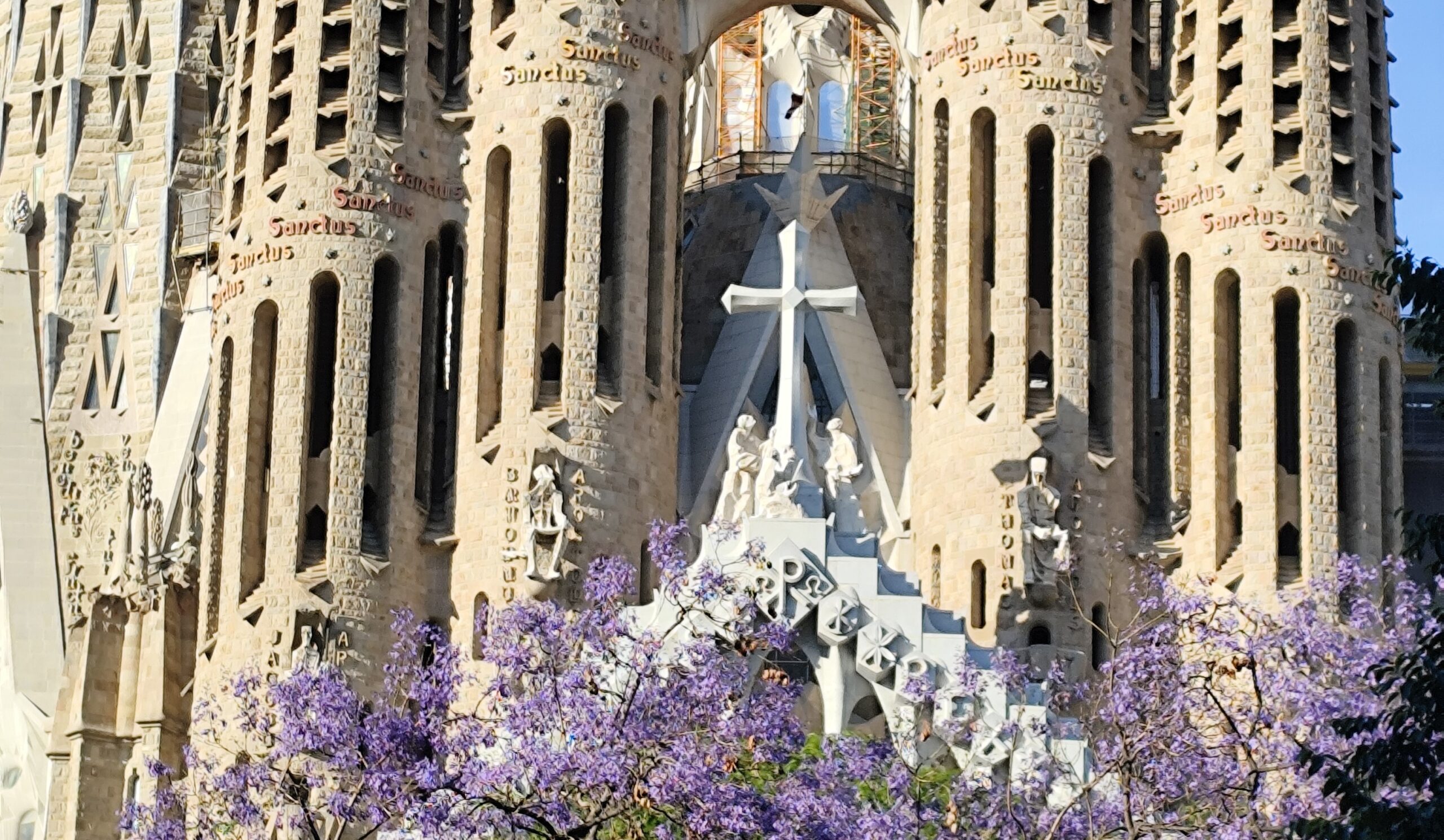
The Sagrada Família is extraordinary. We’re not suggesting you skip it. But the fact that it absorbs the majority of Barcelona’s architectural tourism means that the rest of the Modernista legacy — equally extraordinary, far less crowded, in some cases technically more interesting — goes largely unseen. In this article we will uncover some of Barcelona’s hidden Modernista architecture.
Modernisme was a movement, not just a man. Antoni Gaudí was its most radical expression, but Lluís Domènech i Montaner and Josep Puig i Cadafalch were producing work of comparable ambition and beauty at the same time, often on the same streets.
The Palau Güell: Gaudí Before Anyone Knew His Name
1886. Antoni Gaudí is 34 years old. His patron, the industrialist Eusebi Güell, commissions a mansion on the lower Rambla. What Gaudí builds is unlike anything Barcelona has seen before. The Palau Güell is where Gaudí’s mature language begins to form — the parabolic arches, the extraordinary rooftop covered in trencadís mosaic, the central hall rising through the building like an inverted catenary.
It sits on the edge of El Raval, five minutes from the Rambla. It’s a UNESCO World Heritage Site. And it is almost always substantially less crowded than any of Gaudí’s better-known buildings.
Parc Güell: More Than the Famous Terrace
Everyone knows the terrace. What most people don’t see is the rest — the viaducts, the hypostyle hall, the wooded paths through what was originally intended to be a private housing development. The free area of the park is genuinely extraordinary and genuinely uncrowded. The viaducts, with columns made from rough stone that lean and curve like trees, are among the most ingenious structures Gaudí produced.
The Other Modernistas: Domènech and Puig i Cadafalch
The Palau de la Música Catalana
One of the true gems of Barcelona’s Modernista architecture. Designed by Lluís Domènech i Montaner and completed in 1908 — the only concert hall in Europe lit entirely by natural light during the day. Every surface is covered in mosaic, sculpture, ironwork and stained glass. There is no neutral surface anywhere. It is one of the most extraordinary buildings on earth.
The Hospital de Sant Pau
Also by Domènech i Montaner — the most beautiful functioning medical facility ever built, now a museum you can wander freely. The complex of Modernista pavilions, set in gardens, is one of Barcelona’s finest architectural experiences and one of its least visited. It’s directly aligned with the Sagrada Família: standing at the hospital and looking down the avenue to Gaudí’s cathedral is one of those moments that make Barcelona feel like a city built by people who took beauty seriously as a civic obligation.
Casa Lleó Morera and the Manzana de la Discordia
On the Passeig de Gràcia, within a single block, stand three Modernista buildings by the movement’s three greatest architects: Gaudí’s Casa Batlló, Domènech’s Casa Lleó Morera, and Puig i Cadafalch’s Casa Amatller — the Block of Discord. Most visitors photograph Casa Batlló and walk on. Don’t.
See Modernista Barcelona in Context
Our Barcelona Art & Wine Tour visits the Palau de la Música Catalana. Discover the gallery scene, giving you the artistic context that makes everything else make sense. Book via the link below.