Why Madrid’s Museum Triangle Is Unmissable
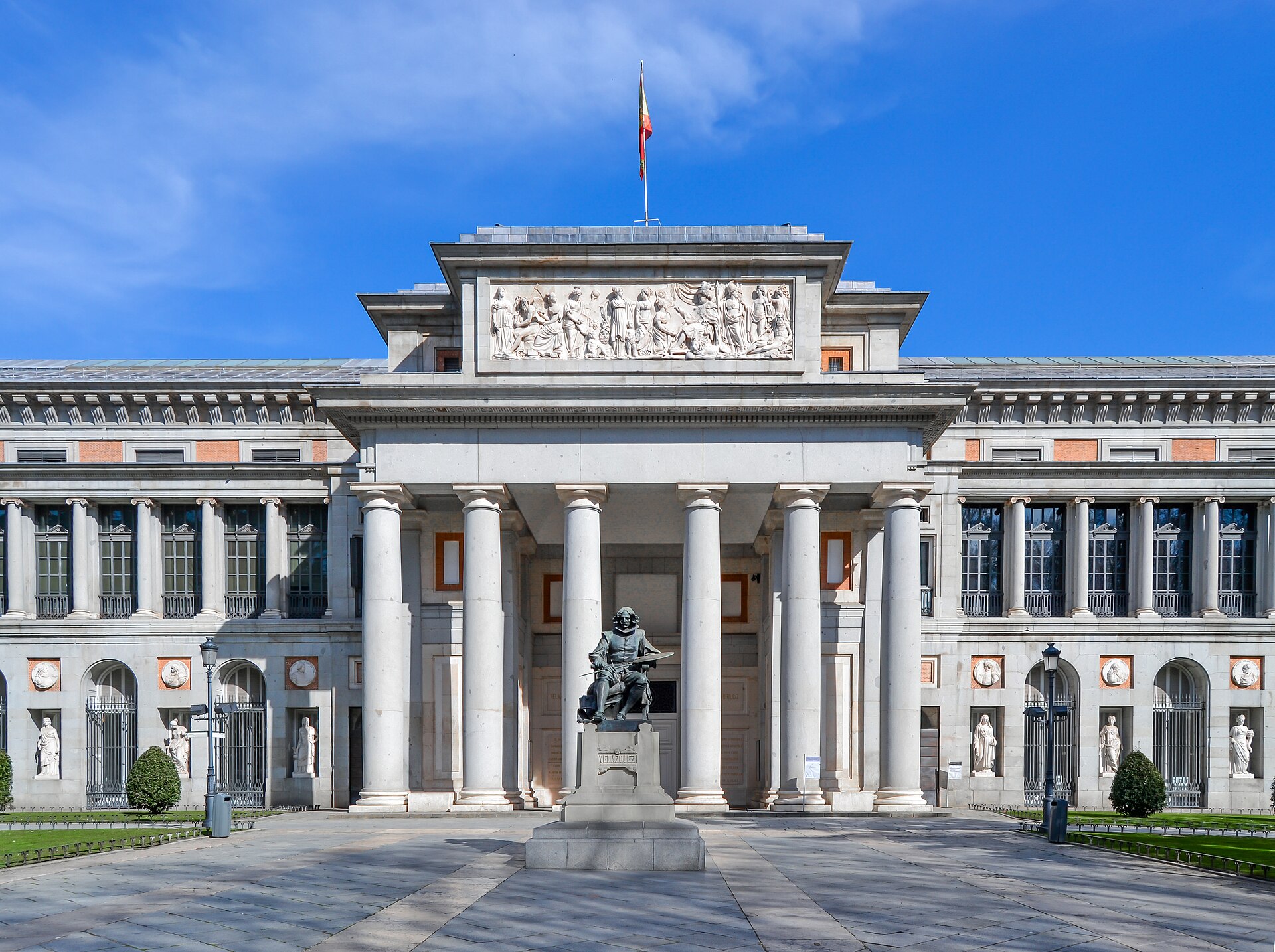
Within a kilometre of each other on the Paseo del Prado, three of the world’s great art museums stand in improbable proximity: the Prado, the Reina Sofía, and the Thyssen-Bornemisza. Between them they cover Western art from the 12th century to the present, with a depth and quality that matches any comparable concentration on earth. The Madrid Museum Triangle is all art history distilled into a square mile.
The problem isn’t access. It’s orientation. Without a sense of what to focus on, visitors risk spending three days in mild overwhelm and leaving with a blurred impression of a lot of paintings. This guide is designed to solve that.
The Prado holds roughly 8,000 works. You will not see all of them. You should not try. Focus on Spanish painting: Velázquez, Goya, and the mystical tradition of El Greco and Zurbarán.
Velázquez – Start Here
Las Meninas is in room 12. Go there first, before the crowds build. Stand in front of it for twenty minutes. Don’t read the information panel – look at the painting. This is one of the half-dozen most important paintings in Western art history, and it is more astonishing in person than any reproduction suggests.
Goya – Don’t Skip the Black Paintings
Francisco Goya is Spain’s greatest painter and one of the most modern sensibilities in art history. The Black Paintings, made directly onto the walls of Goya’s house between 1819 and 1823, are one of the most extraordinary things in the museum. Saturn Devouring His Son is the famous one. The others are equally disturbing and equally brilliant. Don’t rush through this room.
El Greco and the Spanish Mystical Tradition
El Greco – born in Crete, trained in Venice, immortalised in Toledo – represents the Spanish mystical tradition at its most extreme. His elongated figures, his electric colour, his sense of spiritual urgency look like nothing else in 16th-century European painting.
The Reina Sofía: Guernica and Everything Around It
Guernica is in room 206 on the second floor. The room is always hushed. Picasso painted it in 1937 in response to the Nazi bombing of the Basque town of Guernica during the Civil War, stipulating it could only return to Spain when democracy was restored. It arrived in Madrid in 1981.
The preparatory studies in the surrounding rooms are as important as the painting itself – watching how Picasso refined each element gives you a completely different understanding of how deliberate the chaos of the final painting actually is.
The Thyssen: The Collection That Fills the Gaps
The Thyssen holds what was one of the world’s greatest private art collections. Its value lies in what the Prado and Reina Sofía don’t cover: Northern European painting, Impressionism, American art, and the full sweep of 20th-century international modernism. For visitors who’ve spent two days in the other two museums, the Thyssen is revelatory.
Go Deeper with a Guided Tour
With the Madrid Museum Triangle at its core, the Madrid art scene is fabulous. Our
Madrid Art Galleries Tour with Roberto and Colombe places the great Madrid collections in the context of the city’s living art scene. Book via the link below.